*Free One-Pager At The Bottom Of The Page*
Canada First: Understanding the New Era of Defence Industrial Strategy
The Canadian defence sector is undergoing a transformative shift that will reshape how the nation builds, partners, and invests in its military capabilities. With a strategic $6.6 billion investment through the Defence Investment Agency (DIA), Canada is prioritizing domestic industry while fostering international collaboration and driving unprecedented economic growth.
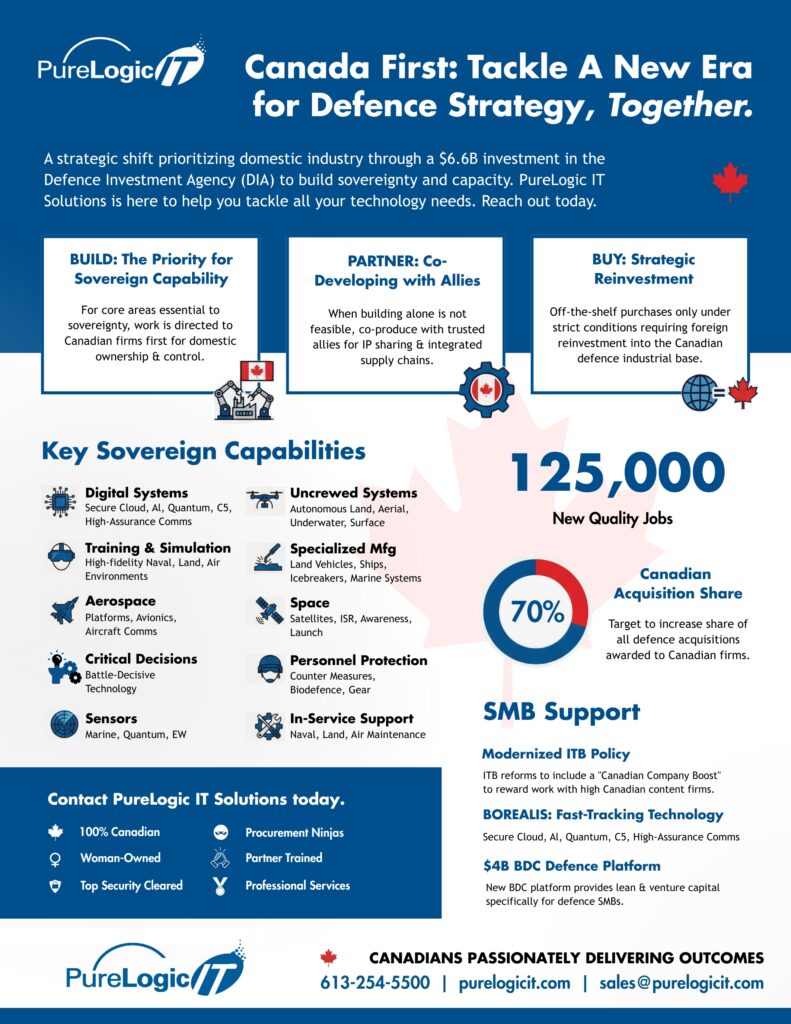
At PureLogic IT, we believe in making complex policy initiatives accessible and actionable. That’s why we’ve created a comprehensive infographic that breaks down the Canada First Defence Industrial Strategy into clear, digestible insights for industry stakeholders, defence contractors, and technology innovators.
To read more about Canada’s Industrial Defence Strategy, click here.
BUILD: The Priority for Sovereign Capability
Canada is taking a “domestic first” approach for core capabilities essential to national sovereignty. This means Canadian firms will be prioritized for projects involving domestic ownership and control, ensuring that critical defence technologies and manufacturing capabilities remain within Canadian borders. This pillar represents a significant opportunity for Canadian defence contractors and technology companies to secure long-term partnerships with the federal government.
PARTNER: Co-Developing with Allies
Recognizing that no nation can build everything alone, Canada is committed to co-producing with trusted allies when domestic production isn’t feasible. This collaborative approach enables intellectual property sharing and integrated supply chains with key partners. For Canadian firms, this opens doors to international defence markets and joint development opportunities.
BUY: Strategic Reinvestment
When off-the-shelf purchases are necessary, they will only occur under strict conditions requiring foreign suppliers to reinvest in the Canadian defence industrial base. This ensures that even international procurement drives domestic capability development and economic benefits.
What This Means for Canadian Technology Companies
For technology firms and defence contractors, this strategy represents a once-in-a-generation opportunity to align business development with national priorities. The clear articulation of sovereign capabilities provides a roadmap for R&D investment, partnership development, and market positioning.
Companies that can demonstrate expertise in the ten key capability areas, particularly in emerging technologies like AI, quantum computing, and autonomous systems, will be well-positioned to secure government contracts and participate in international collaborations.
The emphasis on small and medium businesses, combined with dedicated financing mechanisms, means that innovative startups and scale-ups have unprecedented access to the defence market, traditionally dominated by large primes.
How PureLogic IT Can Help
At PureLogic IT, we understand that navigating government procurement, understanding policy implications, and positioning your company for defence opportunities requires specialized expertise. Our team works with defence contractors, technology innovators, and government agencies to:
- Translate policy into actionable business strategy
- Identify alignment between your capabilities and sovereign priorities
- Navigate procurement processes and compliance requirements
- Develop compelling proposals that demonstrate Canadian value
- Connect you with partnership opportunities across the defence ecosystem
Whether you’re an established defence contractor looking to expand into new capability areas, a technology company seeking to enter the defence market, or an SMB exploring opportunities under the new strategy, we can help you understand where you fit and how to move forward.
Don’t navigate this complex landscape alone.
Our sales team is ready to discuss how your organization can leverage these opportunities, align with national priorities, and position for long-term success in the Canadian defence sector.
Download our Free One Pager Today & Reach Out To Our Sales Team.